 | |
Sent from my iPhone
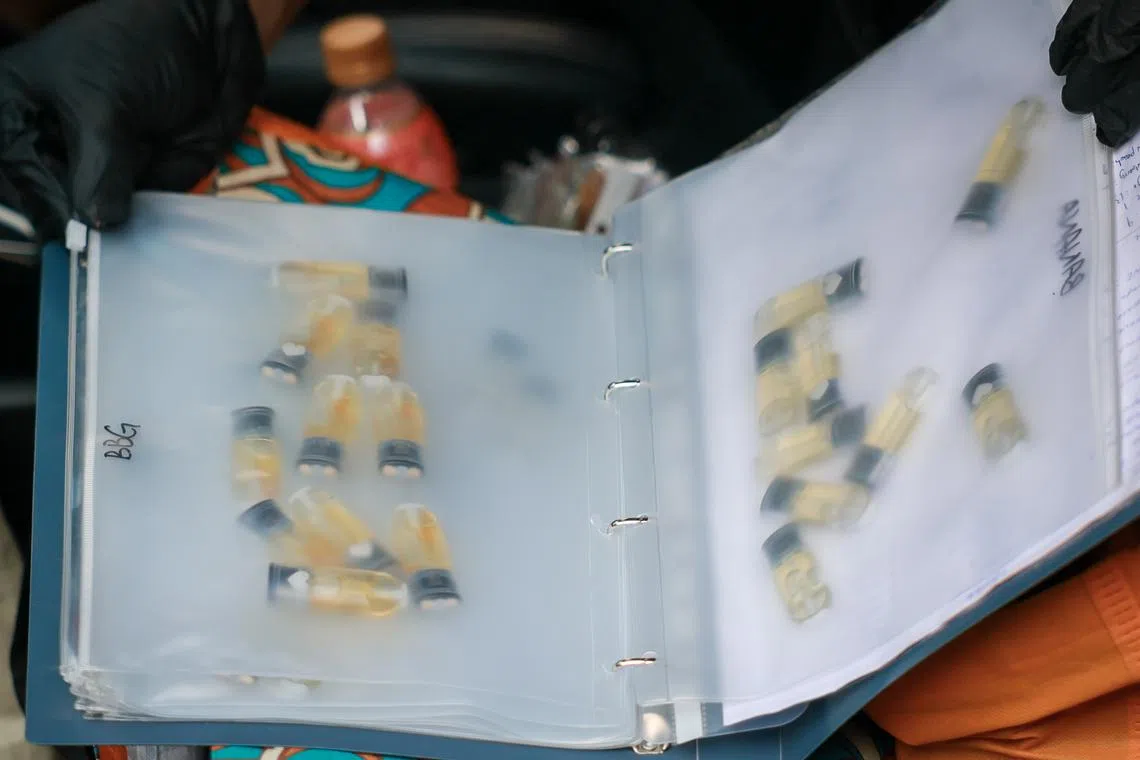
SINGAPORE – Etomidate, which is increasingly
being abused through e-vaporisers
, will be reclassified under the Misuse of Drugs Act (MDA).Offences under the Act carry heavier sentencing and mandatory rehabilitation.
Announcing this on July 20, Health Minister Ong Ye Kung said it was now necessary to
with the growing trend of e-vaporisers or vapes containing the drug.Kpods, which are vape juice mixed with etomidate, have been touted by online sellers to be undetectable by urine tests.
What other drugs fall under the MDA, and what are the penalties for the trafficking, possession and consumption of these? The Straits Times explains.
Etomidate is an anaesthetic agent used in clinical practice to induce sedation. It is currently controlled under the Poisons Act, which restricts its use to licensed medical professionals.
Under the Poisons Act, those caught possessing, using or trafficking pods containing etomidate face a maximum fine of $10,000 and a prison term of two years.
Swipe. Select. Stay informed.
Asia
Asia
Singapore
Business
Asia
Singapore
Singapore
Asia
Vapes, often used to deliver nicotine, are banned in Singapore under the Tobacco (Control of Advertisements and Sale) Act. Besides nicotine, vapes have been found to contain even more harmful substances such as etomidate and ketamine.
Mr Ong said that in a recent seizure of over 100 vapes, a third were found to contain etomidate.
Etomidate is meant to be administrated intravenously under strict medical supervision. Inhaling etomidate into the lungs through vapes can cause failure of vital organs. It can also induce confusion, tremors and unsteady gait, leading to falls and accidents.

Accounts have surfaced of Kpods
triggering erratic, violent and zombie-like behaviour in users
. Like other substance addictions, etomidate can alienate the addict from loved ones. Readers have recounted their experiences of etomidate-laced vapesdestroying their marriage
and straining relationships with their children.Many have called for harsher penalties for those trafficking Kpods, and for better coordination among agencies to help children curb their addiction rather than hand them fines. This would include ordering mandatory treatment for addicts and those caught using the vapes.
Professor Teo Yik Ying, dean of the NUS Saw Swee Hock School of Public Health, for one, had proposed that current laws keep up with the technology – e-cigarettes and vapes – used to deliver synthetic drugs.
"If I am a police officer and I catch someone with a vape, and I detect that the vape cartridge is actually a Kpod... the person is not just caught for vaping, but also caught for possession of narcotics," he said.
Former Jurong GRC MP Tan Wu Meng, who had previously brought up the vaping issue in Parliament, said the scourge is concerning as Kpods could be a gateway for users to try harder drugs.
There are plans to reclassify etomidate as a Class C drug under the MDA. It will share this category with other substances that have lower potential for harm than Class A and Class B drugs, but are still dangerous enough to warrant strict control.
Stimulants like mephentermine and pipradrol, and the hypnotic drug Erimin-5 (nimetazepam), are examples of Class C drugs. These substances may have legitimate medical uses, but are harmful when used in an unregulated manner.
Here is what listing etomidate as a Class C drug would entail:
Stiffer penalties
Under the MDA, illegal possession and use of a Class C drug carry a maximum sentence of 10 years' jail and a $20,000 fine. Those who traffic such drugs may be jailed for up to 10 years and given five strokes of the cane.
This is compared with the maximum penalty of two years' jail and a $10,000 fine under the Poisons Act.
The MDA also provides for supervision and mandatory rehabilitation for drug addicts. The addict must remain at a rehabilitation centre for 12 months unless he or she is discharged earlier.
Whole-of-government effort in enforcement against etomidate-laced vapes
The classification of etomidate as a Class C drug is a recognition of the scale of the vape problem here. The Health Sciences Authority (HSA) has seen an increase in reports on vaping-related offences, from more than 3,000 reports in 2024 to more than 2,500 reports in the first half of 2025.
Mr Ong said on July 20 that various agencies – the National Parks Board, National Environment Agency, police, HSA and Land Transport Authority – are already coordinating enforcement against the consumption of e-vaporisers. When seized by agencies, the vapes first go to the Ministry of Health for testing.
"If it is just nicotine, we will process and fine them (those involved)... In the most serious cases involving drugs, the Central Narcotics Bureau will have to come in, so it will have to be a concerted effort," said Mr Ong.

HSA has also extended the operating hours for its hotline
to report vaping-related offences. The hotline now operates from 9am to 9pm daily, including on public holidays. Previously, it operated only on weekdays, from 9am to 5.30pm.The HSA has also launched a new online portal to report vaping-related offences at
If you need help to quit vaping, you can join the Health Promotion Board's I Quit programme by calling the QuitLine on 1800-438-2000.
Participants need not worry about being prosecuted, as it does not presume they use or have used vaping products.
But those caught using or possessing such items will be prosecuted.
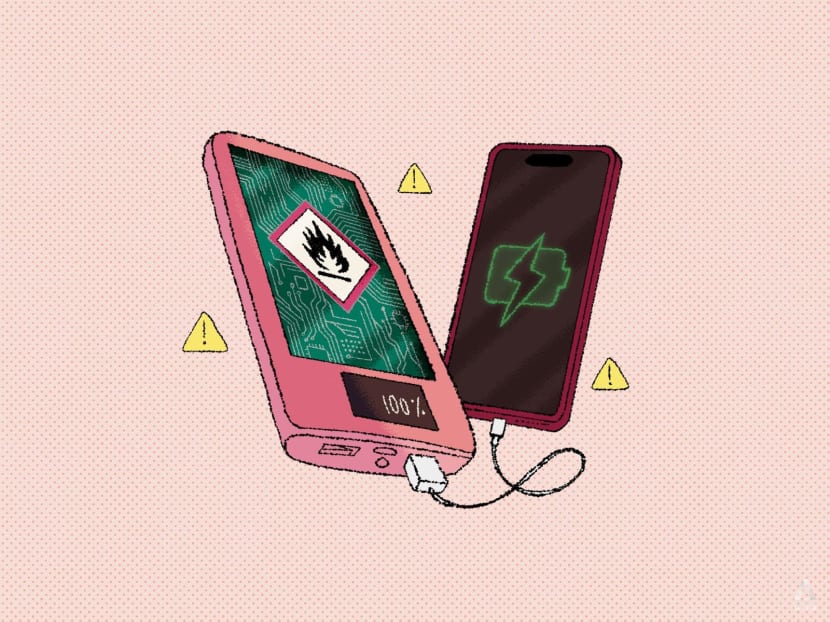
Singapore has seen an increase in fires involving lithium-ion battery products such as power banks and active mobility devices in the last few years. (Illustration: CNA/Nurjannah Suhaimi)
Read a summary of this article on FAST.
Rushing out of the house on Jun 22 at about 2.30pm, 19-year-old Sophie did not think twice about leaving her portable power bank charging on her bed.
The power bank – a door gift from a school reunion party in 2022 – had been working well just weeks earlier during a trip to Japan. Apart from minor scratches due to wear and tear, nothing else seemed amiss.
Ms Sophie, who is preparing for her A-Level examinations and declined to make public her last name for privacy reasons, had placed the power bank on the bed to avoid making it a tripping hazard on the floor.
So it came as a shock when later that day, at around 9.40pm, her family called and told her that a fire had started in the bedroom she shared with her older sister.
"My younger brother had walked by my room to take a shower when he noticed black smoke coming from the top and bottom of the door," the teenager said.
"The power bank had exploded."
Ms Sophie and her older sister were not home at the time but the rest of their family members were. They used a fire extinguisher to put out the fire, then dialled 995 as the room continued to smoulder.
The Singapore Civil Defence Force (SCDF) eventually extinguished the fire.
"The whole room was matte black – everything was covered in soot," she said of the aftermath.
"We had to call contractors to remove the soot, clean the room professionally and fix up all the wires. We still don't have an air conditioner since it melted. That will come sometime this week."
The flames engulfed her bed, most of her wardrobe and the plastic lid of her record player, among other belongings.
Since the incident, Ms Sophie and her family have been more vigilant about charging their electronic devices.
"I don't think I can ever own a power bank after this incident," she told CNA TODAY on Jul 8.
A quick scan of news headlines shows her experience is definitely not an isolated case. Chinese newspaper Shin Min Daily News reported that a power bank exploded while it was charging on Jul 5 at about 11am, in a four-room flat at Block 339B Kang Ching Road in Jurong West.
In response to queries from CNA TODAY, SCDF said reported power-bank fires have risen from just six in 2020 to 13 in 2024.
Moreover, fires involving active mobility devices such as personal mobility devices (PMDs), personal mobility aids and power-assisted bicycles continue to increase.
SCDF received 67 calls for fires involving active mobility devices last year, a 21.8 per cent increase from the 55 calls in 2023.
The rise in such fires here, along with other high-profile battery fire incidents globally, has cast a spotlight on the risks associated with lithium-ion battery products, which pack a powerful punch for their size.
Growing safety concerns have prompted regulators and airlines worldwide to tighten regulations on their use.
In February this year, a burning power bank filled a plane with smoke – a Batik Air flight from Johor Bahru, Malaysia, to Bangkok, Thailand – and this was just one of several mid-flight incidents involving power banks in recent months.
As a result, several airlines, including Singapore Airlines and Scoot, now ban the use and charging of power banks on flights.
More recently, the Civil Aviation Administration of China said power banks can be taken on board domestic flights within China only if they are clearly marked with the official China Compulsory Certification logo. Power banks that have faded or illegible labels of the certification or are part of a product recall will also be barred.
E-scooters and e-bikes are also banned on public transport in some countries, such as the United Kingdom, over concerns about fire risks.
Battery fires can break out for various reasons such as overcharging and manufacturing defects, experts told CNA TODAY.
However, considering the sheer number of consumer electronics – from power banks, smartphones and laptops to power-assisted bicycles and PMDs – the experts noted that serious incidents are extremely rare relative to the number of devices.
Lithium-ion batteries are rechargeable batteries that store and release energy when a liquid or gel moves lithium ions between electrodes within the battery cell.
Dr Denice Durrant, director of engineering and data science at UL Standards & Engagement (ULSE), a global safety organisation based in the United States, said: "They are impressively efficient and long-lasting, which is why they increasingly power many of the devices we rely on daily, including smartphones, power banks and electric vehicles."
However, the batteries can catch fire. Apart from overcharging and manufacturing defects, other reasons include overheating, short-circuiting and physical or mechanical damage.
Exposure to high temperatures and a phenomenon known as thermal runaway can also spark a fire.
Thermal runaway occurs when an electrochemical cell's temperature rises uncontrollably due to self-heating, continuing to release electricity as it produces heat faster than it can cool down.
Because lithium-ion cells are densely packed in a battery, this heat can spread to adjacent cells, triggering a chain reaction. The result can be a rapid increase in temperature across the battery pack, potentially leading to smoke, fire or even explosions.
Dr Sheikh Mohamed Anees, a senior forensic scientist at the Home Team Science and Technology Agency (HTX), said that batteries undergo wear and tear through repeated charging and discharging cycles over time.
"This can lead to internal defects, increasing the likelihood of thermal runaway. A common indicator of ageing is battery bloating – though this is not the only warning sign."
Another expert said that there are other challenges and risks when putting out a fire involving a lithium-ion battery.
Assistant Professor Hung Dinh Nguyen from the School of Electrical & Electronic Engineering at Nanyang Technological University (NTU) said: "The fire in a lithium battery is difficult to put out.
"Lithium batteries burn at very high temperatures; for instance, flame temperatures as high as 1,500°C have been reported in battery modules."
Beyond that, the fire can self-sustain in sealed battery packs, so the battery may continue burning even after the outer flames are extinguished.
"What is more, the flame could reignite in the battery module due to residual thermal energy and ongoing chemical reactions," Asst Prof Nguyen added.
"Lithium battery fires also release toxic gases such as carbon monoxide, therefore extreme caution should be taken when trying to handle the fire."
Experts told CNA TODAY that the risk of fires can also differ across products and battery sizes.
Power Banks
Assistant Professor Dhivya Sampath Kumar from the Singapore Institute of Technology (SIT) said that portable chargers often lack sophisticated safety features found in more integrated systems such as PMDs or smartphones. These typically have integrated battery management systems with multiple layers of cell protection, temperature sensors and firmware-level battery diagnostics.
A battery management system tracks the voltage of the battery and prevents the charging voltage from exceeding the maximum charging voltage to avoid overcharging.
"Smartphones and PMDs are designed as complete systems, with battery safety embedded into both their hardware and software, which includes thermal throttling, adaptive charging algorithms, and protection coordinated through the device's main processor," Asst Prof Sampath Kumar added.
"(In contrast), power banks are standalone charging devices with off-the-shelf battery cells and basic protection boards. While reputable brands implement protections like overcharge, short-circuit and over-discharge cutoffs, cheaper models may lack these or use substandard components, increasing fire risk."
Related:
Asst Prof Sampath Kumar also said that power banks with fast-charging features and higher mAh ratings – the measure of a battery's electrical charge capacity – can introduce added risks, especially when not paired with adequate safety components.
"Fast charging involves pushing higher current or voltage through the battery in a shorter time. This creates increased heat within the battery cells and within the charging circuitry.
"If the power bank lacks effective thermal management, accurate current regulation or a well-calibrated battery management system, the device can overheat, degrade faster or undergo thermal runaway, especially under extreme temperatures," she added.
High-capacity power banks, which typically are 20,000mAh and above, contain a larger number of lithium-ion cells. This means they have a longer battery life, but it comes with a higher risk of internal imbalance and cell-level failures.
"Poor-quality, high-capacity banks might use refurbished cells, mismatched cell groups or skip protection circuits to cut costs, increasing the risk factors," she cautioned.
Active Mobility Devices
Fires originating from active mobility devices can be caused by the same factors as those in power banks, for example, manufacturing defects and physical damage.
However, with these devices, illegal modification can also increase the risk of fires. Some people tinker with the batteries to lighten the device's weight and increase the battery's capacity.
Such changes can bump up the device's speed and charge time but they come with a risk.
Mr Low Choon Chye, vice-president of Service Quality Centre, a subsidiary of the Management Development Institute of Singapore (MDIS), said: "There are many considerations in place, like the current and specification requirements of electrical components.
"If you were to change some of the components, it might lead to incompatibility and a surge in current in some cases."
The Land Transport Authority (LTA) and SCDF said in a joint statement last year that 60 per cent of fires from active mobility devices in 2023 resulted from illegally modified devices, typically caused by an "electrical anomaly in their battery".
"Investigations conducted by SCDF and LTA showed that most fires related to active mobility devices were caused by modifications to the device electrical circuitry by using non-original parts or installation of additional batteries."
Electric Vehicles
Experts said that fires from electric vehicles (EVs) are rare globally, noting that there are strict regulations around EV batteries.
These e-vehicles also often come with layers of built-in protection systems such as advanced cooling systems and cell spacers, which significantly reduce the likelihood of fires, Dr Sheikh of HTX said.
In Singapore, SCDF said that it responded last year to 215 fires involving internal combustion engines and EVs. Of these, only one involved an EV.
Between 2020 and 2024, SCDF responded to five EV fires. In contrast, it responded to 928 internal combustion engine vehicle fires.
"Notwithstanding the relatively low number of EV fires at present, SCDF is aware and prepared for the unique challenges such as the risk of a thermal runaway involving the high-voltage battery," it said in response to CNA TODAY's queries.
Every vehicle should be equipped with a dry powder fire extinguisher, which can be used to put out a small fire before it spreads or grows larger, it added.
"If you detect a fire and have a fire extinguisher with you, you may attempt to extinguish the vehicle fire while it is still small or safe to do so. Otherwise, call 995 for SCDF's assistance.
"However, if you notice signs of a battery fire involving an EV, do not attempt to extinguish the fire and instead call 995 for SCDF's assistance."
Despite the well-documented risks, lithium-ion batteries remain the top choice for consumer products since there are no alternatives just yet, experts said.
Other existing alternatives, such as lead-acid and nickel-cadmium batteries, have low energy densities and therefore cannot store as much energy in the same amount of space.
"Their usage is limited to power grid applications and as backup power supplies," Asst Prof Nguyen from NTU said.
Since lithium is a rather rare metal, researchers are developing new batteries based on sodium and potassium. The research is promising, he added, but further development is needed before these can compete with lithium-ion batteries.
Although concerns about lithium-ion batteries are valid, the batteries are safe and their risks are manageable, the experts said.
"Lithium-ion batteries can be dangerous if mishandled or poorly made," Dr Durrant of ULSE cautioned, saying that this was exactly why ULSE develops battery safety standards and works to further public education around these devices.
"If battery-powered products are built in accordance with high safety standards and used properly, the likelihood of an incident is very low," she added.
Mr Low from the Service Quality Centre said that one recognised safety standard is the UL2054, which requires batteries in household and commercial applications to undergo rigorous testing under abuse conditions such as short-circuiting, overcharging, dropping and crushing.
This is often required for products sold in North America.
There is also the UN38.3, a mandatory transportation safety standard for lithium batteries, established by the United Nations.
"It applies to all lithium-ion and lithium-metal cells and battery packs shipped by air, sea or land … and it is required by international shipping regulations to prevent incidents during transit," Mr Low said.
In Singapore, several organisations also enforce safety labelling and testing for these batteries.
The Competition and Consumer Commission of Singapore (CCCS) told CNA TODAY that the Consumer Product Safety Office (CPSO) administers the Consumer Protection (Consumer Goods Safety Requirements) Regulations.
Under this regulation, suppliers are responsible for ensuring that general consumer goods, including power banks, or other consumer electronics containing lithium-ion batteries, comply with applicable safety standards before they can be sold here.
CPSO also conducts "proactive market surveillance to identify unsafe consumer goods being sold in the market and may require suppliers of non-compliant products to cease supply", CCCS said.
In 2022, two out of five tested power bank models were found to be non-compliant with international standards and their suppliers were directed to stop the supply of the products.
The office then tested 13 power bank models in 2024 and all were found to be compliant with international standards.
"Since 2022, the CPSO has investigated several incidents involving battery-powered products, including power banks and other consumer electronics.
"CPSO engaged the suppliers in these cases and verified that products complied with applicable safety standards," CCCS said.
LTA also regulates the use of active mobility devices in Singapore. Among its requirements, PMDs must be certified under the UL2272 fire safety standard, which ensures that the battery can withstand extreme physical conditions.
On Jan 23 this year, a retailer was charged when caught selling a non-compliant battery and an illegally modified power-assisted bicycle, which were both linked to fires in April 2024.
This was Singapore's first such prosecution. The retailer, 29-year-old Prince Bryan Tan, was ordered to pay a S$7,000 fine.
Dr Sheikh of HTX said these standards are reviewed and recommended by inter-agency task forces comprising experts from the public and private sectors, regulators and stakeholders.
These standards are constantly reviewed and updated based on international best practices and domestic research findings before eventual adoption.
He added that the agency conducts research on improving capabilities in preventing and mitigating battery fires, for example, by improving infrastructure such as sprinklers and misting systems.
HTX is also a co-founder of the Association of Southeast Asian Nations (ASEAN) Battery Safety Network, which aims to establish and improve regional battery safety standards and best practices, Dr Sheikh said.
Even with the best efforts and more stringent regulations, it is not possible to fully extinguish battery fires, the experts said.
Mr Low from the Service Quality Centre said that although manufacturers do their own testing, faulty products may still end up in consumers' hands.
"Even when sent for testing, (manufacturers) don't send an entire batch of products to be individually tested," he added. "There's always a confidence level that the products will be safe based on probability."
Beyond that, there is also user error.
"Physical damage can cause a short circuit. Battery cells are separated by separators, often made of plastic. So, for example, if you drop (the battery), you could damage that, causing a short circuit," Mr Low explained.
Asst Prof Sampath Kumar from SIT said that online marketplaces and unverified imports pose regulatory challenges because it is difficult for the authorities to keep track of every power bank purchase to ensure compliance.
"Moreover, the diverse nature of the power banks with varying capacities and technologies makes consistent monitoring a big challenge," she added.
"Many cheap online models don't declare their certifications and the average buyer might not be aware of their safety risks."
Since it is nearly impossible to avoid lithium-ion products due to their widespread use, consumers can take some steps to reduce the risk of fire.
They should buy lithium-ion battery products from trusted retailers, ensure the goods are not subject to any recalls and check that the charger or adapter carries a valid SAFETY mark registered with the CPSO, the experts and authorities said.
Since batteries are exposed to wear and tear over time, the experts also cautioned against buying second-hand products.
Active mobility devices are required to meet regulatory requirements and testing before being imported and used in Singapore. People looking to buy such devices should check with retailers that they have met testing requirements and standards.
CCCS told CNA TODAY that after purchasing the products or devices, consumers should also take precautions when using or charging a battery product:
Electronic devices should not be charged overnight and unattended, the experts cautioned.
Users should also be careful not to charge their devices with fast chargers that have a higher electrical output than what their device can handle.
And watch out for tell-tale signs that a lithium-ion battery product should not be used, which include:
CCCS said that should these warning signs appear, consumers should stop using the device and contact the authorised distributor or service provider for assistance.
Such devices should also be disposed of carefully at an e-waste collection point.
CNA TODAY visited 10 homes where fires from active mobility devices had taken place in the last three years across Singapore between Jul 8 and 10. Four homeowners had moved out, while the others were not at home or declined to comment.
Their neighbours, though, have changed their perspective on lithium-ion batteries following the fires. They said they were more cautious around PMDs and do not leave their electronic devices charging overnight and unattended.
As for Ms Sophie, two weeks spent sleeping in the living room and having to renovate her bedroom and replace her belongings have left her fearful of power banks.
"I went out with some friends and my phone battery was dying but I didn't have a power bank on me. I had to borrow my friend's," she said.
"I really don't think I can have a power bank again after this incident."
Additional reporting by Saw Yone Yone and Ooi Boon Keong.
Related:
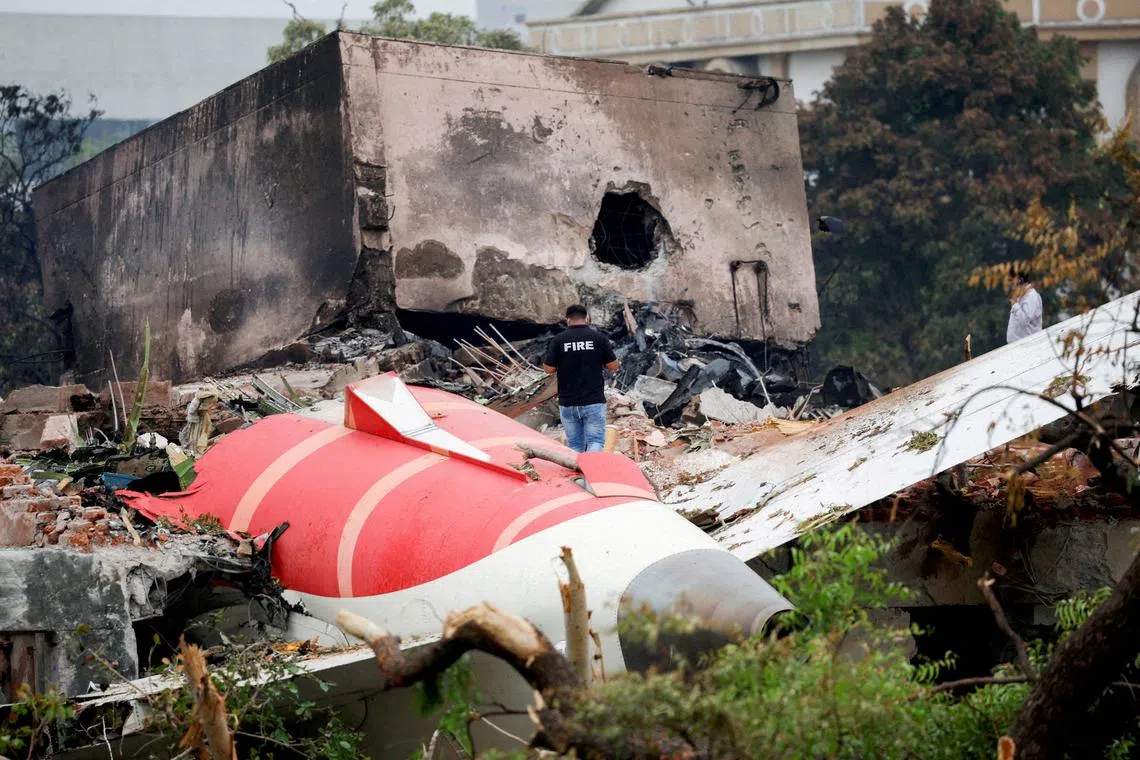
- A preliminary report depicted confusion in the cockpit shortly before
an Air India jetliner crashed, killing 260 people
in June, after the plane's engine fuel cutoff switches almost simultaneously flipped, starving the engines of fuel.The Boeing 787 Dreamliner bound for London from the Indian city of Ahmedabad immediately began to lose thrust and sink down, according to the report on the world's deadliest aviation accident in a decade released on July 12 by Indian aviation accident investigators.
The report by India's Aircraft Accident Investigation Bureau (AAIB) about the June 12 crash shortly after takeoff raises fresh questions over the position of the critical engines fuel cutoff switches, while suggesting that Boeing and engine maker GE had no apparent responsibility for the accident.
The crash is a challenge for Tata Group's ambitious campaign to restore Air India's reputation and revamp its fleet, after taking over the carrier from the government in 2022.
Almost immediately after the plane lifted off the ground, CCTV footage shows a backup energy source called a ram air turbine had deployed, indicating a loss of power from the engines.
In the flight's final moment, one pilot was heard on the cockpit voice recorder asking the other why he cut off the fuel.
"The other pilot responded that he did not do so," the report said.
Swipe. Select. Stay informed.
Business
Business
Multimedia
Life
Asia
Life
World
It did not identify which remarks were made by the flight's captain and which by the first officer, nor which pilot transmitted "Mayday, Mayday, Mayday" just before the crash.
The commanding pilot of the Air India plane was Captain Sumeet Sabharwal, 56, who had a total flying experience of 15,638 hours and, according to the Indian government, was also an Air India instructor.
His co-pilot was Clive Kunder, 32, who had 3,403 hours of total flying experience.
The fuel switches had almost simultaneously flipped from 'run' to 'cutoff' just after takeoff.
The preliminary report did not say how the switches could have flipped to the cutoff position during the flight.
Experts said a pilot would not be able to accidentally move the fuel switches.
"If they were moved because of a pilot, why?" asked US aviation safety expert Anthony Brickhouse.
The switches flipped a second apart, the report said, roughly the time it would take to shift one and then the other, according to US aviation expert John Nance.
He added that a pilot would normally never turn the switches off in flight, especially as the plane is starting to climb.
Flipping to 'cutoff' almost immediately cuts the engines.
It is most often used to turn engines off once a plane has arrived at its airport gate and in certain emergency situations, such as an engine fire.
The report does not indicate there was any emergency requiring an engine cutoff.
At the crash site in Ahmedabad, both fuel switches were found in the run position and there had been indications of both engines relighting before the low-altitude crash, said the report, which was released around 1.30 am IST (4 am Singapore time) on July 12.
Air India acknowledged the report in a statement. The carrier said it was cooperating with Indian authorities but declined further comment.
The US National Transportation Safety Board thanked Indian officials for their cooperation in a statement and noted that there were no recommended actions in the report aimed at operators of Boeing 787 jets or the GE engines.
The US Federal Aviation Administration said its priority was to follow the facts where they lead, and it was committed to promptly addressing any risks identified throughout the process.
Boeing said it continued to support the investigation and its customer, Air India.
GE Aerospace did not respond immediately to a request for comment.
The AAIB, an office under India's civil aviation ministry, is leading the probe into the crash, which killed all but one of the 242 people on board and 19 others on the ground.
Most air crashes are caused by multiple factors, with a preliminary report due 30 days after the accident according to international rules, and a final report expected within a year.
The plane's black boxes, combined cockpit voice recorders and flight data recorders, were
recovered in the days following the crash
and later downloaded in India.Black boxes provide crucial data such as altitude, airspeed and final pilot conversations which help in narrowing down possible causes of the crash.
Air India has been under intense scrutiny since the crash.
The European Union Aviation Safety Agency said it plans to investigate its budget airline, Air India Express, after Reuters reported that the carrier did not follow a directive to change engine parts of an Airbus A320 in a timely manner and falsified records to show compliance.
India's aviation watchdog has also warned Air India for breaching rules for flying three Airbus planes with overdue checks on escape slides and in June warned it about "serious violations" of pilot duty timings.
India is banking on a boom in aviation to support wider development goals, with New Delhi saying it wants India to be a job-creating global aviation hub along the lines of Dubai, which currently handles much of the country's international traffic. REUTERS
 | |
