Friday, November 28, 2025

Hong Kong fire: What we know so far | The Straits Times

Hong Kong fire: What we know so far | The Straits Times

Hong Kong fire: What we know so far

The article describes a devastating fire that occurred in a Hong Kong high-rise residential complex, resulting in at least 94 fatalities and hundreds missing. The fire spread rapidly, fueled by strong winds and the presence of bamboo scaffolding and green netting on the building. Volunteers have been mobilized to provide aid and support to those affected by the tragedy.

A devastating fire tore through a Hong Kong high-rise residential complex, killing dozens and leaving hundreds missing.

A fire in Hong Kong has killed at least 128 and left about 200 unaccounted for, making it the city's deadliest fire in seven decades. The casualties include a firefighter.

Rescue efforts at the residential development have wrapped up, said Hong Kong Security Chief Chris Tang on Nov 28.

The fire, which had been raging for over 24 hours through the Wang Fuk Court housing complex in the northern district of Tai Po, was mostly contained by firefighters by the early hours of Nov 28.

Here's what we know so far.

Each floor has eight units, all arranged around a common area that includes stairs and three lifts.

Lift Lift Lift Stairs UNIT 1 UNIT 3 UNIT 4 UNIT 7 UNIT 5 UNIT 6 UNIT 8 UNIT 2 6.75m Window 7.52m 4.83m Common area

The exact cause is unknown, but the fire appears to have started around the external scaffolding of Wang Cheong House.

The flames then spread inside the building and, fanned by strong winds, engulfed several neighbouring blocks.

All eight residential blocks within the estate had been undergoing renovations since July 2024, and were covered in bamboo scaffolding and a green netting.

Bamboo The sturdy but flexible poles form the frame of the scaffolding. Diagonal outer bracing Horizontal ledgers spaced vertically Plasticties Smaller struts Outer mesh net Wraps scaffolding to prevent debris flying. Consumed by flames during this fire. Foam boards Added to outer surface of windows for protection. However, many went up in flames during the blaze.

Sources: Hong Kong Buildings Department, Reuters reporting

While the government has pushed to phase out bamboo scaffolding for construction in favour of metal ones and clamps, there are still around 2,500 registered bamboo scaffolders in the city.

In March, the government said half of public construction works must now use metal scaffolding to improve worker safety.

In 2025 alone, there have been at least two other fires involving bamboo scaffolding, according to the Association for the Rights of Industrial Accident Victims in Hong Kong.

Pictures show that while much of the bamboo scaffolding remains intact, the green netting was mostly destroyed.

Bamboo scaffoldingpartially burnt Burnt bits ofgreen mesh Plastic foam boardsblocking windows

Source: REUTERS

However, this latest fire could be attributed to other factors, such as the material used on top of the bamboo scaffolding.

At the scene of the Wang Fuk Court inferno, exterior netting and plastic sheets on the scaffolding that "burned far more intensely and spread much faster than permitted materials" were discovered, Security Secretary Chris Tang said.

Boards of styrofoam were also found plastered to window frames in some units within the estate, he said.

He called the situation "unusual".

photo
The blaze, which started in the afternoon on Nov 26, was still raging at night. PHOTO: EPA

Volunteers gather to help affected residents, temporary shelters set up

Hong Kongers are trying to locate the hundreds of people who remain missing after the fire broke out. They have set up many groups through online channels and social media platforms, including Facebook, Telegram and WhatsApp.

An online spreadsheet, now converted into a web app, has been created for people to mark themselves as safe. Another allows people to indicate what help or supplies they may need and where.

The next of kin of missing persons can also get updates through this web app.

Scores of volunteers have been giving out bananas and energy drinks to the firefighters at the scene. They have also mobilised in groups to donate and distribute warm clothing, portable chargers, appliances, hot water bottles and food to those affected by the blaze.

The authorities have set up at least 10 temporary shelters across Tai Po district to house those who have been evacuated from their homes. More will be opened as needed, they said.

Sent from my iPhone

Tuesday, November 25, 2025

Commentary: Killer PSLE questions can haunt students long after primary school - CNA

Commentary: Killer PSLE questions can haunt students long after primary school - CNA

Commentary: Killer PSLE questions can haunt students long after primary school

Students with traumatic PSLE experiences can develop test anxiety or self-doubt that persists into adolescence and even adulthood, says psychiatrist Dr Lim Boon Leng.

Commentary: Killer PSLE questions can haunt students long after primary school
Challenging questions can shape a child's entire emotional experience of PSLE and of examinations in general. (Photo: CNA TODAY)

Read a summary of this article on FAST.

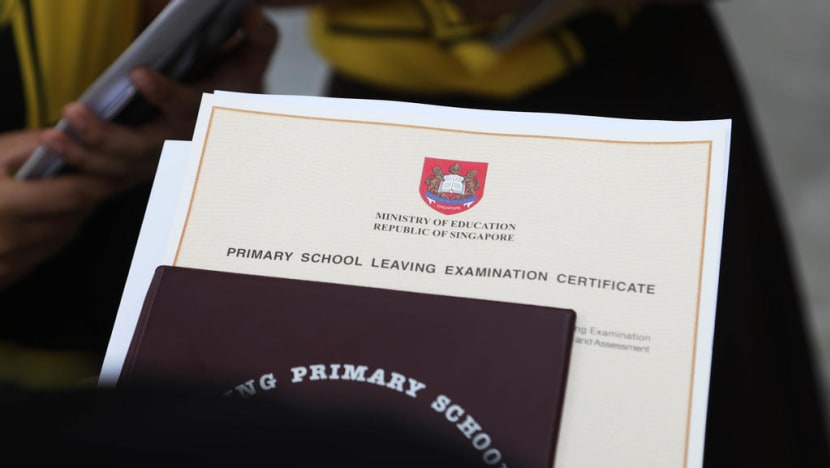
SINGAPORE: Thousands of anxious Primary 6 students will be collecting their Primary School Leaving Examination (PSLE) results on Tuesday (Nov 25). While waiting, some students may be wondering whether the killer questions that stumped them affected their scores. 

The Ministry of Education has stated that about 15 per cent of PSLE questions are intentionally challenging so that higher-ability students can be assessed correctly. On paper, that may seem modest. In practice, these questions can shape a child's entire emotional experience of PSLE and of examinations in general.

As a psychiatrist, I've seen clients who've been affected by the long tail of PSLE stress. An undergraduate I spoke with could vividly recount a single question on the PSLE Mathematics paper. "I still remember Jess and the ribbons," she said, referencing the 2017 "ribbon" question where Jess needed 200 ribbons of 110cm each, and the rolls came in 25m tapes.

Caught between converting units, counting ribbons per tape, and deciding whether to round up or down, she panicked. The rest of the paper spiralled out of control. Maths had always been her best subject, yet that day she walked away with a worse grade than her prelims and the belief that she was lousy in maths. 

Her example encapsulates how just one complex question under pressure can erode confidence, even in high-achieving children.

DEVELOPING BRAINS

To understand why these "killer questions" loom so large, we need to recognise that 12-year-olds are neurologically unfinished. Their prefrontal cortex, which is responsible for decision-making, planning, impulse control and emotional regulation, is still undergoing active construction.

The far-from-mature brain explains why Primary 6 students would struggle with challenging questions, particularly complex ones that need strategic thinking or high-level problem-solving. Expecting them to demonstrate composure, reasoning and speed under exam stress may be ambitious and unfair.

Students with certain conditions are particularly vulnerable in high-pressure exam settings. An estimated 5 per cent to 8 per cent of school-age children have attention deficit hyperactivity disorder (ADHD), and 3 per cent to 10 per cent of students have dyslexia.

Students with ADHD may have difficulties with concentration and time management, and would tend to falter with complex questions under timed conditions. Those with dyslexia, who process language more slowly even when comprehension can be strong, would likewise suffer.

Children with anxiety tendencies are especially sensitive. When a difficult question triggers their stress response, their working memory can collapse, leaving them momentarily unable to think clearly, even if they know the content.

This problem is not hypothetical. Research in developmental neuroscience consistently confirms that acute stress impairs executive functions such as working memory, cognitive flexibility and attention – precisely the skills needed to handle novel problems.

The killer questions can inadvertently punish students even if they possess exceptional creativity, intelligence or long-term potential.

In any case, if the child's difficulty is not in understanding the concepts but in filtering noise and managing anxiety, then killer questions are measuring the wrong construct. It is assessing neurological maturity under stress, not cognitive potential.

Related:

PSYCHOLOGICAL CONSEQUENCES

Parents often believe children "bounce back quickly". Yet from what I see personally and clinically, PSLE can leave enduring emotional marks. Students with traumatic PSLE experiences can develop test anxiety or self-doubt that persists into adolescence and even adulthood.

ADVERTISEMENT

Scroll to continue with content

Scroll to continue with content

A secondary school boy told me he still feels waves of dread and fear whenever tests approach, tracing it back to the PSLE moment when he froze on the challenging questions and underperformed.

A single baffling question can become a trigger that derails an entire exam. The cognitive error that is internalised thereafter can be damaging and long-lasting: "I'm a failure because I can't solve this."

Surely a student-centric system that values calm resilience should nurture it, not test it under pressure.

Related:

A KINDER, SMARTER ASSESSMENT

Some will argue that life is tough and children must learn to handle difficulties. It is true that resilience is forged through adversity. However, real resilience grows when students are supported in their struggles, and can recover should they fail.

No one is arguing for a softer society, and rigour remains essential, but we can surely design smarter assessments and have kinder calibrations. The late bloomer is not a myth but a developmental reality.

To help us determine the usefulness of PSLE, we would need data on how exam performance correlates with long-term outcomes – not only academic outcomes like university admission rates, but also psychological outcomes such as impact on lifelong learning.

Early detection, intervention and easier access to structured accommodations for neurodivergent learners and anxious students will help to ensure equity. We can retain standards without inflicting unnecessary psychological damage.

The PSLE is not just a test but also a mirror of national values. It reflects how Singaporean society defines ability, success and most importantly, fairness.

If 15 per cent of questions are deliberately challenging, then the harder task for us adults is ensuring that our systems are attuned not only to academic ability, but to human potential in all its varied, messy and developing forms.

Dr Lim Boon Leng is a psychiatrist at the Gleneagles Medical Centre.

Listen:


Sent from my iPhone