Saturday, February 15, 2020

Why in a cheap food paradise, some Singaporeans are still going hungry - CNA

Why in a cheap food paradise, some Singaporeans are still going hungry - CNA

Why in a cheap food paradise, some Singaporeans are still going hungry

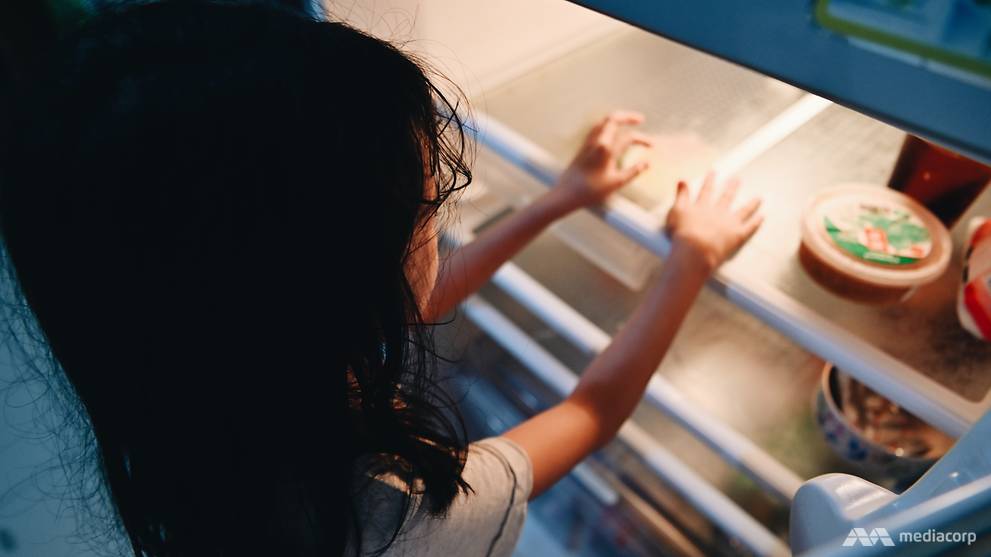
A cleaner unable to work, a family with a 4-room flat, a single dad in debt – those experiencing food insecurity are more diverse than you think. Here's what they're going through, in the first of a 2-part special report.
CNA Insider
A1 food insecurity 32
Going without lunch, 8-year-old Katie assuaged her hunger with water, while her dad struggled to pay off debts. (Photo: Goh Chiew Tong)
(Updated: )

Bookmark

SINGAPORE: Rice, hot water and salt to taste. Shanger Pannerchelvam remembers a time when these were the only ingredients his family could afford for dinner. He was only 12 years old. 

His mother had to stop work as a cleaner at a condominium when artery disease affected her legs. One year later, his father fell into clinical depression and left his fast-food job. Just like that, the family had no breadwinner.

Like most adolescent boys, Shanger had a burgeoning appetite - which a small bowl of porridge was unable to satisfy. "I was full of anger as I ate. I'd think to myself, why must I eat this?" he recalled.

After dinner, he'd go to sleep. "There was nothing I could do about it. I slept so that I wouldn't feel any emotions."

That was his only meal of the day. In the morning, he'd go to school with an empty stomach, fighting hunger pangs through recess because he'd given his S$1 school meal voucher to his 8-year-old brother.

"He had his own coupon but it wasn't enough. He was always hungry also," said Shanger, now 22.

A1 food insecurity 31
This plain rice was what Shanger and his brother once had to survive on every day. (All photos: Goh Chiew Tong, Christy Yip, Rauf Khan)

The family of four was given help with the bills, and food rations. But the latter wasn't enough. The brothers resorted to begging for money from strangers after school. 

"We'd give the 'poor thing' face, say our Ez-link cards had no money and we couldn't get home," said Shanger.

"We would ask for a dollar each for transport. Then we'd use this to buy a plate of chicken rice to share." 

HUNGER IN A FOOD SECURE NATION 

A simple dish like chicken rice is also a luxury to 55-year-old Azhar Ibad. It's a S$2 meal he can afford to have only once a week. 

The rest of the time, it's instant noodles for the cleaning supervisor, who has been unable to work for a year due to growing weakness in his limbs that doctors suspect might be Parkinson's disease.

While he waits for his ComCare assistance to be renewed, his kitchen cabinet is filled with packets of Maggi, cereal and Milo. "If I feel my stomach full, okay already. No choice," he said. "I eat this to survive." 

In a food paradise like Singapore, where cheap eats abound around almost every street corner, why are instant noodles a staple and emblem of resignation for some?

What makes putting food on the table a struggle for them, in a nation ranked No 1 on The Economist Intelligence Unit's Global Food Security Index in December 2019? 

A1 food insecurity 38

There is no national data on the extent of food insecurity in Singapore. But aside from the index (which used gauges like affordability, availability, quality and safety of food), there are at least two other indicative reports.

Some 4.1 per cent of Singaporeans faced moderate to severe food insecurity between 2016 and 2018, according to the State of Food Security and Nutrition in the World 2019 report by the United Nations. 

The report took into account both survey responses and country-level data such as food consumption and availability. (By comparison, the figure was 5.4 per cent for South Korea, 8.1 per cent for Indonesia and 13.4 per cent for Australia.) 

Locally, a study conducted by the Lien Centre for Social Innovation at the Singapore Management University (SMU) surveyed 236 Singaporeans in four low-income neighbourhoods being served by food support groups. It found that nearly 1 in 5 participants in these areas reported severe food insecurity in 2018. 

"It was surprising because in a country like Singapore, where the stereotype is that there is no hunger, we were expecting to find just a handful of people," said SMU associate professor of political science John Donaldson,  while stressing that the findings didn't represent Singapore as a whole.

A1 food insecurity 30
Would you want to live on instant noodles everyday, for months? asks Azhar Ibad, 55.

To be severely food insecure means being in the shoes of someone like Shanger – not knowing where your next meal is coming from, having to skip one, or even go an entire day without eating.

But more generally, food insecurity refers to cases like Azhar's: The lack of access to sufficient, safe and nutritious food, due to financial or physical constraints.

In other words, being food secure "is not just about being fed, because you can eat instant noodles every day," said Nichol Ng, co-founder of The Food Bank Singapore. "But that doesn't provide you with the nutrition."

As to why food insecurity exists – 'poverty' is the too-easy answer to give. 

Yet, 27 per cent of participants in the Lien centre survey had household incomes of S$2,000 or more. (Eligibility for ComCare assistance cuts off at S$1,900 household income or S$650 per capita income.)

A1 food insecurity 37

Nor is Singapore short of safety nets for those in need: From Government schemes such as ComCare and the Silver Support Scheme, to the efforts of a plethora of social service agencies, charities, religious organisations, grassroots groups, and community do-gooders.

So why, then, do some fall through the cracks? And who are they?

As CNA Insider discovered – after tracking vulnerable families and individuals over months, and speaking to researchers and assistance groups – those who experience food insecurity are a surprisingly diverse group: One that can't be defined by housing type, family size, age, or income group alone.

WATCH: Hunger in Singapore - the documentary, part 1 (20:08)

BEYOND THE ELDERLY POOR

The elderly poor often spring first to mind as an at-risk group – and not just for the lack of savings or income.

Particularly for those who live alone, sickness, limited mobility and frailty pose a mammoth challenge to the simple act of cooking for themselves. "Some, because of physical or mental health, aren't able to go downstairs and get food, even if it's just a short distance from home," said Sam Ngeow, centre manager of TOUCH Home Care.

SG elderly help wheelchair
Frailty contributes to food insecurity among the elderly living alone.

Fion Phua, the founder of volunteer group Keeping Hope Alive, recalls in June last year finding a famished 79-year-old man lying on the floor of his one-room flat in Marsiling, too weak to move.

The man – a former security guard who had not been working since April after being injured in a fall – had not eaten in three days, she said. "We had to send him to the hospital." 

READ: Ploughing on: The faces and insecurities of Singapore's elderly working poor

But, the elderly poor are also high on the list of vulnerable groups that receive attention. 

Not only has the Pioneer Generation package made a "real and important difference" in recent years, say many observers, the elderly are also the target of numerous social service agencies, volunteers and NGOs. 

The resulting irony is, such seniors can end up over-served by multiple well-meaning groups. Indeed, most the elderly poor whom CNA Insider encountered in various neighbourhoods were receiving food rations or free meals.

A2 food insecurity 1
Madam Tay Seok Har gets free packed meals to help feed her 70-year-old husband, mum and bed-ridden daughter.

The flip side of this, however, is that other food insecure groups whose needs may not be so plain to see, or so simple to ascertain, find themselves falling under the radar.

'HIDDEN' FIGURES

A stay-at-home mother of five, Fay* found herself going on Facebook to look for donors offering milk power or food. She had asked various organisations for help, only to be told: You're not staying in a rental flat.

The 36-year-old and her husband had bought a four-room HDB flat, and after they moved in in April last year, she said, the floors started to crack and there were leaks everywhere - an unsafe situation for her children, aged two to 18.

To pay for the renovations, her husband, a technician, borrowed "a few thousand dollars" from licensed money lenders, a debt they are still now paying off. 

"Living in a purchase flat does not explain our daily struggles," she said. 

Sometimes I see my friends staying in rental flats, they seem happier. They get more assistance.

The family is currently getting dry food rations from their Family Service Centre.

While the majority of food-insecure participants in the Lien centre study did live in one- and two-room flats, 40 per cent live in three-room flats or bigger. Food assistance groups say that, while rare, they've even encountered those living in condominiums or landed property who needed their aid.

A1 food insecurity 35

These Singaporeans are overlooked as they are often not eligible for financial aid, observers noted.

To ensure that funds go to those who really need it, ComCare assistance, as well as aid disbursed by some larger welfare organisations, often involves some form of means testing. An applicant's household income, number of household members and flat type are factors that can be taken into account.

But such data doesn't always reveal the whole picture, others say. Sim Bee Hia, chief executive officer of Food From The Heart, has encountered struggling families with a household income of more than S$3,000. 

"If you were to do a house visit, you'd see the wife bedridden and fed through a tube, three young children, and a mentally challenged nephew," she said. 

The danger in means-testing is that people who genuinely need help will fall through the cracks because they do not fit the criteria in one way or another, said economist Walter Theseira, an associate professor at Singapore University of Social Sciences.

"We often think people who stay in larger flats don't need financial assistance since they could afford a big flat," he said. 

But many of them might be just one retrenchment or one serious illness away from a tight financial situation.

FEEDING MORE MOUTHS

For low-income families, the food situation can also get precarious with each new member.

Member of Parliament (MP) Lee Bee Wah, for one, sees more families than elderly residents coming to seek help at her Meet-The-People sessions in Nee Soon South.

These families, who are often already receiving assistance like Workfare, "face difficulty in getting three meals a day especially with the addition of a newborn," she said. "They need to buy more milk powder and pampers, which means less money to put food on the table."

A1 food insecurity 25
The arrival of an infant can spiral some families into food insecurity.

Then, there are the unforeseen medical expenses and costs of transport to go see a doctor when the child falls sick. "These things can be a burden, especially when their income is not stable and when they are daily-rated workers," said the MP.

Food Bank's Nichol receives a number of desperate emails from young families. She recalls one in particular. "A single father with seven children got retrenched. 

He wrote, 'My children have not eaten for three days. Can you please bring food?'

Her team promptly delivered three cartons of food. When the man's children saw them, they fell to their knees in tears, she said. "It's really as though they hadn't seen food for days. We started crying too."

Then there's Ansar, who has three children from his first marriage and four from his second. 

The 45-year-old works as a security guard, but only part-time as the pain from an old spinal injury gets so unbearable some days that he struggles to leave his two-room rental flat. 

Each month, he makes on average S$800, and gets S$200 in cash and S$80 in NTUC FairPrice vouchers from Darul Arqam Singapore. After paying his ex-wife maintenance for their three kids,  and buying milk powder and diapers for his two-year-old, he hasn't much left to feed six mouths.

A1 food insecurity 39

Ansar gets by on one meal a day, chugging water to feel full. The children meanwhile get chicken nuggets, fries, bread and spreads. They receive food support from Food From The Heart, but when desperate, Ansar also turns to groups on Facebook where members donate milk powder or diapers to families in need.

SMU's John Donaldson however, dismisses the stereotype that having many children is what keeps families in food insecurity.

"Often it's people with two or three children, or who have elderly frail parents," he said. In fact, families who are working hard yet still struggle to put food on the table are "much more common" among the food-insecure, than those with a large brood.

THE SINGLE-PARENT STRUGGLE

Even so, many low-income families seem to get along fine in terms of meals, with careful management of their expenses – until they lose a breadwinner.

More than half of the moderately-to-severely food insecure individuals in the Lien centre study were from families headed by single, divorced or widowed parents. 

Three years ago, Sam* was embroiled in an emotionally tumultuous divorce. "I suddenly had to take care of my daughter alone," said the 38-year-old. "I was very stressed, but I kept quiet and tried to cope by myself." 

A1 food insecurity 12
'Sam', father of a hyperactive 8-year-old, struggled mentally and financially after his divorce. 

It affected his concentration at work as a security guard. For a couple of months, he couldn't report for work. So he borrowed money. The debt repayments snowballed. Before he knew it, there was simply not enough money to feed his daughter and his sister who stays with them. 

Then there is Norashikin Mohd, 36, who was a housewife until her husband was jailed for several months. Then she had to start working as a school cleaner for S$600 a month, half of what her husband had made as a canteen stall operator. 

"It was quite overwhelming," the mother of four kids, aged 7 to 14, said in Malay. "I was worried that when the kids return from school, there's no one to take care of them." 

A1 food insecurity 23
Norashikin struggled to find time to look after and cook for her 4 children on her own.

Norashikin tried to cook each day before leaving for work – a meal, usually of rice and just one dish, to be shared by all over both lunch and dinner. As the Lien centre study noted, food insecurity isn't just caused by cash constraints, but also time constraints which leave little opportunity for shopping or cooking. 

Since her husband's release recently, the couple have been working at his canteen stall and they bring home the cooked food leftovers for dinner. Whether it's enough or not, the family of six have grown used to making do. 

THE CASE OF THE HUNGRY 8-YEAR-OLD

Learning to 'make do' is what many of the food insecure do out of resignation, and not knowing where to turn for help or not qualifying for it.

One afternoon last September, Fion from Keeping Hope Alive was visiting some elderly residents at a block of rental flats, when an 8-year-old girl came barreling down the corridor.

"She was in her school uniform, her hair was messy," Fion recalled. She had some custard buns left over from lunch, which she offered the girl. 

"Her reply was, 'How did you know I am starving?' Her earnestness really caught my attention." 

The girl, Katie*, lived in a one-room rental flat which was filthy and, in Fion's view, not a suitable living environment for a child. She had bugs in her hair and no clothes other than the school uniform she was wearing. 

Fion wondered, where were her parents?

A1 food insecurity 21
The conditions that Fion found 'Katie' living in. The family's fridge was nearly empty.

After getting a hold of Katie's dad on the phone, Fion eventually met him. That's how she got to learn about Sam – the single dad still struggling with the fallout from his divorce.

He got to see his daughter only briefly in the morning before heading out for his 12-hour shift as a security guard. Constantly tired and stressed, he seemed almost defeated by the never-ending cycle of paying off his debt only to borrow more to stay afloat. 

Utilities bills went unpaid. On top of all that, he had to deal with his daughter's hyperactive condition. "While I'm at work, her teacher keeps messaging me, 'This is what your daughter did today, please do something about her'," Sam said.

Under all this weight, Fion recognised his dogged determination to be a father. "He is actually very willing to look after her. But he has to work long hours, which takes up all his energy and strength," she said. 

A1 food insecurity 36

Early on, Sam said, he'd tried applying for assistance and described his debt problems. But he was told his salary of S$2,000 a month before CPF deduction was "high".

"They should really see the hours that people work. There are people who find it hard to cope. Instead they just look at the income to determine if we have a problem," he said, frustrated.

The good thing is that during the school term, Katie, who is on financial assistance, gets one meal a day taken care of under the School Meals Programme. Dinner at home usually consists of rice and one dish cooked by her 56-year-old aunt. 

When asked if she got hungry, Katie paused for a long time before saying in Mandarin: "It's not like we're super hungry. Aunty and I just go hungry together. Or I'll just drink water."

A1 food insecurity 40

THE LIFELONG IMPACT OF HUNGER

But hunger isn't just an ache to put up with for the day – or week, or months.

That's because the effects of food insecurity can last a lifetime, even well after life circumstances improve.

When Shanger entered polytechnic, he started to get paid for his internship and for distributing flyers, while his younger brother had his National Service allowance. So regular meals became a thing again for his family. 

Shanger no longer eats salted rice for his one meal of the day – quite the other extreme, in fact.

He now eats up to five meals a day, typically consisting of fried rice, chicken rice and fast food – all the food he never got to enjoy as a child.

A1 food insecurity 11
Shanger, 22, making up for all the lost meals of his childhood.

"The past impacted me a lot because now that I'm able to do what I want, I just can't let go," he said. "I probably will get another illness, from eating too much. 

But I told my doctor off; I don't care, because I can finally eat.

The typical diet of a person who is food insecure – processed meals high in carbohydrates and sodium, low on nutritional value – puts them at higher risk of obesity, diabetes, cardiac disease, and other chronic illnesses. 

When they get out of food insecurity, the shift to energy-dense foods can lead to high blood sugar levels. And psychological conditioning kicks in: Some like systematically overeat, because of an obsession to not waste food. 

The lean years have also left another mark on Shanger. "For four years at least, I skipped breakfast and lunch. That's why I have gastric now," he said. "The stomach-ache is unbearable." 

He has to take medication for gastrointestinal disorder, which doctors tell him is for the long haul. 

A1 food insecurity 33
The medical cost of the years he went hungry - pills he now has to take for the long-term.

The cost of food insecurity is not just borne by individuals, but in the long run, by the country as well in the form of increased public healthcare spending.  

A study by the Centres for Disease Control and Prevention has linked food insecurity to higher healthcare expenditures across the US, due to the higher rates of associated chronic illnesses like diabetes, heart disease, kidney disease and depression.

The study's co-author estimates that food insecurity costs the US health system an additional US$53 billion a year. 

HUNGER AND THE CYCLE OF POVERTY

Health problems aside, food insecurity exacts another grave cost on low-income families – it could exacerbate the struggle to break out of the poverty cycle.

A child who experiences hunger might fall sick more often, take longer to recover from illness, and suffer from poorer concentration in school, noted Goh Yiting, a senior dietitian at Tan Tock Seng Hospital.

The implications of all this – the inability to focus, more missed days of school – makes it much harder for the child to keep up with school work. 

A 2017 US study showed that children who experienced food insecurity in their first five years of life were more likely to be lagging behind in social, emotional and, to some degree, cognitive skills when they began kindergarten. Other research has shown that if children enter kindergarten lagging behind their peers, they tend to stay lagging. 

A1 food insecurity 13
Serene Loh's 8-year-old often experiences fatigue, which causes her to miss classes in school. 

Indeed, The Food Bank's Nichol shared her experience of providing food to a primary school that ran a daily breakfast programme for students from low-income families.
By simply providing a well-balanced meal in the morning, the school saw a drastic improvement in the attendance rate, she said.

"I would like young children to eat better so that they can study and focus better. If they can do that, they really have an opportunity to break out from the poverty cycle," she said.

As for food insecure adults, it's been posited that when resources are scarce, it can affect the ability to make decisions or see the bigger picture.

READ: How poverty tends to trap people into making poor decisions 

Attention is focused on immediate needs, like what food to put on the table, while the stress of having to worry about this day after day can reduce bandwidth for long-term planning. 

Serene Loh, 39, can certainly identify with this.

A1 food insecurity 10
Serene, a mother of 4, preparing dinner. It's often her only meal for the day.

When we first met her in September 2019, Serene had a budget of just S$10 a day to cook dinner for herself, her husband and her four children. To get the best bang for her buck, she walked to three different supermarkets in the vicinity to compare prices. 

"I have to think every day, what can I cook today with the money I have? It's very stressful," she said. She ate only one meal a day herself, so that her children could have more food.

She wanted to get a job to supplement her husband's income as a GrabFood rider, but didn't have the headspace to look for one. 

Asked at the time if she would go to the family service centre to renew her application for food rations – which had expired months ago in March 2019 – Serene's face reflected helplessness as she muttered: "I don't know."

"I have to take public transport there, which needs money as well. And it's hard for me to find the time when I have to cook dinner, do housework and take care of kids at home," she said.

A1 food insecurity 9
Frozen hash browns are a staple for Serene every week as they are cheap and can last the family for at least 3 days.
 

BREAKING THE CYCLE

Food From The Heart CEO Bee Hia points out that food support for parents like her doesn't just fill the stomach; it also frees up mental bandwidth. 

"Solving the food problem allows our beneficiaries to pay more attention to other things, such as upgrading themselves, paying bills, buying an extra storybook for their children, which are important," she said. 

Nor Ain is an example of how a little help can go a long way.

For almost a year, she and her five children had survived mainly on rice, fried eggs in soy sauce and instant noodles. 

A1 food insecurity 8
Nor Ain, 32, almost fell into depression, worrying how to feed her children. (Photo: Goh Chiew Tong) 

"My kids would complain, why cannot eat meat? And I would have to explain to them that I didn't have the money," said the 32-year-old who was in the process of a divorce, and was bunking in with a friend.

"I cried every night, thinking about what tomorrow would bring. I really felt like a useless mum."

Things turned around after the Housing Board expedited her application for a two-room rental flat, and Ain finally could focus on finding a stable job, with her social worker's help, instead of part-time work. 

What helped take some of the stress off her shoulders was assistance of S$1,070 a month from the Social Service Office (SSO), S$300 from the Islamic Religious Council of Singapore (MUIS), and food rations from the family service centre. 

Now working freelance for a retail start-up, she makes up to S$900 a month, thrice what she used to. "We live happily now. We had a really hard time last year, but things are better now," she said, smiling.

A1 food insecurity 7
Nor Ain and her 5 kids are doing better now, with assistance. (Photo: Goh Chiew Tong) 

PROBLEMS WITH ASSISTANCE

But does every family in need find assistance easy to get? 

First of all, "we often assume that individuals or families will come forward for help," said SUSS' Walter Theseira. "The reality is that many households either don't know about the welfare schemes, so they won't come forward; or they may feel embarrassed about identifying themselves, because of the stigma associated with seeking help."

Several families brought up the hassle of applying for aid at the SSO or bigger welfare organisations. They spoke with frustration of the need to need to fill up multiple forms, and to apply for renewal of assistance every few months with the re-submission of documentation.

"Many people feel that if they have to repeat their story over and over again for the amount of money that they're receiving, it simply isn't worth it," said SMU's John Donaldson. 

That has been Serene's experience. Since the first she spoke to CNA Insider, she has secured ComCare assistance through the SSO. But the process, she said, was "very troublesome".

"The officer told me I need to print my CPF statement, but my printer at home has no ink already," she said. "I already don't have enough money to buy food, how to buy printer ink?"

Nor has she renewed her food rations assistance from the family service centre, as she found the need to resubmit documents a hassle.

A1 food insecurity 16
Serene's family of 6 gathers for dinner - which is often her only meal for the day. 

A spokesperson for the Ministry of Social And Family Development (MSF) noted that ComCare short-to-medium term assistance (SMTA) helps those in temporary financial need to take steps towards gaining employment or higher-paying jobs, thus becoming self-reliant.

"Only documents relevant to the change of circumstances are needed during the reapplication. This provides an opportunity for SSO officers to provide timely assistance."

The spokesperson added that efforts have been made to deliver social services in a more "comprehensive, convenient and coordinated manner". For example, ComCare SMTA clients who need help with childcare fees need not submit the same documents for assessment. 

But Serene is not the only one to feel put off from trying. Said Theseira: "In Singapore, the route to getting more assistance requires more application, more means testing, and hence more stigmatisation of the individual, compared to some other countries."

Nichol from the Food Bank agrees: "In the US, many food pantries operate on a walk-in basis. There are no questions asked because there is already shame attached to walking into a food pantry to get help."

A2 food insecurity 51
Is there stigma in asking for assistance?

CAUGHT IN LIMBO

Meanwhile, those on ComCare assistance must apply for renewal every few months, and this can take an average of six weeks to process. That's when folks like Azhar – the 55-year-old who has been medically unfit to work for a year – find themselves in transitory poverty.

He used the last of his S$400 from ComCare and MUIS to stock up on instant noodles and cereal for the wait. 

When CNA Insider visited his apartment in September, three months after he'd reapplied for assistance, he had three packets of instant noodles left, while his fridge was barren apart from some eggs that he cooks with the noodles. 

"The first month you can eat Maggi. The second month. you can eat. The third month?" he sighed. 

A1 food insecurity 34
 

SSOs do provide ComCare interim assistance for families that request urgent relief for their immediate needs. This can include those waiting for their SMTA applications to be renewed, said the MSF spokesperson. Azhar did not apply for this.

But, there are also other avenues of quick assistance, for those waiting in limbo.

MP Lee Bee Wah acknowledges the need for national social support schemes to practice "due diligence". And while needy residents wait for their applications to be processed, she has a local welfare fund that can be tapped for immediate help, almost hassle-free.

"Sometimes before the end of the month, whatever the SSO has given them, some families have already spent," she said. So they are given groceries and NTUC FairPrice vouchers to tide them over. 

She also helps residents write to the SSO asking for the waiting time to be shortened. Most of the time, the office accedes, she said. 

A1 food insecurity 14
Dr Lee Bee Wah giving out rations at her Meet-The-People session. (Photo: Goh Chiew Tong) 

MANY HELPING HANDS  

That's not all.

In her Nee Soon South ward, the charity Food From The Heart works with her grassroots team to distribute donated bread and groceries; the Lion's Club delivers fresh vegetables and fish; while the Indian Muslim Social Service Association helps with groceries for Muslim households. 

There's also a community fridge that Singapore Food Rescue (and resident gardeners) helps to stock.

READ: Reduce waste by redistributing food surplus to those in need

At Kampong Glam every day, elderly rental-flat residents and other beneficiaries are served free lunch at a new food hub built for them – a collaboration between MP Denise Phua, PeaceConnect Senior Activity Centre, and Willing Hearts. Nutritious all-day breakfasts could soon follow.

Across Singapore, efforts like these are replicated with many groups stepping up to help – and they have made a definite impact in recent years.

There are some 125 food support organisations with an online presence, according to the Lien centre study, and they range from non-profits and Institutions of a Public Character (IPC), soup kitchens and Meals-On-Wheels providers, to informal ground-up groups. 

Hunger virus 1
Volunteers sorting out donations at Food From The Heart's Joo Seng Road warehouse. (Credit: Food From The Heart)

Started 16 years ago, Food From The Heart for example works with residents' committees, senior activity centres and family service centres – people "on the ground who know who needs help," said Bee Hia.

 "We have grown because there's a need – more people are requesting for food," she added.

READ: Food charities get wave of help following appeal

While it's not clear how many of the 125 groups are actually active or regular in their outreach, they help fill the gaps that the Government's social support network cannot cover. This is in line with MSF's "many helping hands" approach.

"The Government can't do everything for everyone," said former academic Jenson Goh, who as part of a course he once taught at NUS' Residential College 4, had looked at Singapore's food system. 

"It looks out for those living with the bare minimum, those really living day to day. For people who fall through the cracks, the NGOs on the ground try to serve them." 

These folks include Azhar, who while waiting for his application for assistance to be processed, has been receiving food support from Free Food For All.

And father of one, Sam, had a huge weight lifted off his shoulders when Fion and her volunteers at Keeping Hope Alive helped pay off his debts.

"We helped him so that he can focus his energy on taking care of his daughter and not be bogged down by repayments," Fion said. 

They also gave his home a fresh coat of paint and new furniture, while the refrigerator – once stocked with half-eaten junk food – has been transformed into what Fion laughingly calls "a rich person's fridge". 

A1 food insecurity 6
Sam and Katie's fully-stocked fridge, thanks to volunteers of Keeping Hope Alive. 

The volunteers keep it stocked with cereal bars and packets of Milo for Katie's breakfast, fruits for snacks, and other groceries which her aunt can use to cook dinner.

"It's better than eating potato chips or gummies when Katie is very hungry," Fion said. "We want her to have strength so that she can concentrate in school."

But the ultimate goal for the volunteers is to help the family become self-reliant. "Sending food can't be a long-term solution," Fion pointed out. 

Similarly, Li Woon Churdboonchart believes it's important for beneficiaries to feel a sense of responsibility.

She founded Volunteer Switchboard – a social enterprise which, among other things, makes monthly food deliveries to seniors in rental blocks at Jalan Kukoh. The estate's younger residents who are in need of assistance are themselves encouraged to volunteer with the group, instead of having aid simply handed to them. 

Otherwise, Li Woon said: "You're teaching the younger generation that it is okay that you don't go out to work, It's okay that you just keep taking from the public."

A2 food insecurity 55
Volunteer Switchboard at work.

BUT STILL MISSING OUT 

But here's the rub: Despite the sheer number of food charity groups out there, more than half of the households reported as severely food insecure in the Lien centre study had infrequent or no food support at all. Yet, they all lived in areas that were being served by such groups. 

What this highlights are the inefficiencies in this informal food support system, which has been growing rapidly and organically, without any kind of coordination between groups so far. The question is, can this change?

SUSS' Walter Theseira, for one, is skeptical that food assistance should be a long-term solution to food insecurity. Something more fundamental, like a universal basic income, is needed, he believes. 

While in some countries distributing rations make sense because food insecurity is a problem of "food deserts" – whole areas where affordable food isn't available – this is not the case in Singapore. Here, he said, "it's a problem of people not having enough income to get the food they want".

A1 food insecurity 17
A meal enough for a family of six?

The idea of a universal basic income is not without its detractors. There is, however, one other thing all agree on: Food insecurity is a problem that should concern Singapore as a society

"Ensuring no one goes hungry and has access to basic meals is fundamental," said MP Denise Phua. "There is much to do. And I don't believe there will ever be enough paid social workers to address the needs of a rapidly ageing society, and of those who may fall through the cracks because no one was alerted or who do not qualify due to technical reasons. 

It will take a village to piece together a strong social safety net – each of us can play our part.

Said Theseira: "Singapore is a very rich and abundant society. And if you feel that you constantly have to make very constrained decisions, there's going to be a long-term effect on your ability to feel like a regular member of society."

"Food insecurity isn't just a problem of nutrition," he added. "It's also a problem of whether people psychologically feel like they're part of society, and whether they fit in."

In Part 2 of CNA Insider's special report: With so much food assistance out there, why are good intentions falling short?


Sent from my iPhone

Saturday, December 7, 2019

‘Without him, I’d be in Boys’ Home’: The Normal Stream student who just needed someone to believe in him

'Without him, I'd be in Boys' Home': The Normal Stream student who just needed someone to believe in him

'Without him, I'd be in Boys' Home': The Normal Stream student who just needed someone to believe in him

After barely scraping through to secondary school, Yap Zi Yang's self-esteem was shattered - until a youth worker with The Scaffold Programme helped him believe he was capable of more than he thought possible.

CNA Insider
(rs) tsp main pix
As a former Normal (Technical) stream student, senior youth worker Shafik Said has been in the position of students like Yap Zi Yang.

Bookmark

SINGAPORE: When Yap Zi Yang saw the score '140' on his Primary School Leaving Examination result slip, he was crushed.

"Study so hard, also fail," he said. "I just wanted to give up." 

And give up on himself, he did. 

Just barely making it into the Normal (Technical) stream at Bedok Green Secondary School, he skipped classes three times (or more) a week to stay home. When he did bother to show up, he was often splayed out in his chair at the back of the classroom, fast asleep. 

"I felt like I had no future," he said. "I just took one day at a time."

Directionless, low on self-esteem, and resentful of the way he thought his peers in the Express stream looked down on him, Zi Yang lashed out.

"We targeted the smaller students. Sometimes I would take their bags and throw them on the floor. 

"Our teachers always said Express students don't look down on us," he added. "But we just felt like they did." 

(rs) TSP 21
Zi Yang, now 17.

Shafik Said knows how students like him feel. "When you're in the Normal stream, you kind of are compared," said the senior youth worker with Children-At-Risk Empowerment Association (CARE Singapore). 

You tend to believe you are way less capable than others. You aspire to less.

Each time he walks into a class and asks "how many of you think being in Normal Technical means it's the end for you?", Shafik said, "a few of them will raise their hands".

MORE THAN MEETS THE EYE

But there was more to Zi Yang than the rebellious, couldn't-care-less side he showed in school.

When the school bell rang, 13-year-old Zi Yang, instead of hanging about with his friends, would head straight home, where he'd help his mother around the house and care for his ailing father.

A seamstress, Madam Chin Bee Ching had been taking on more work making curtains ever since Zi Yang's father suffered a mild stroke in 2014 and could no longer work as a taxi driver. 

Zi Yang looked up to his dad. When he was younger, they'd go for supper together, just father and son, at the coffee shop near their home. Over prata with egg, they'd have heart-to-heart conversations about everything.

"My father was one of the closest people to me. I would talk to him about things that I went through, sometimes he would talk to me about his issues. He understood me," Zi Yang, now 17, remembered. 

(rs) TSP 15
Zi Yang and his family in happier years. (Courtesy: Yap Zi Yang)

In January 2015, the month Zi Yang entered Secondary 1, his father was diagnosed with terminal cancer. The man he looked up to rapidly wasted away before his eyes. 

"He couldn't even hold a spoon himself. Sometimes in the morning, if I needed to feed him, I'd stay home," said the teenager who, without anyone asking, became his dad's main caregiver.

Instead of going to school on some mornings, he'd help his dad down to the void deck, where the older man loved to sit and enjoy the breeze. It was there that Zi Yang's father put on his young shoulders a responsibility that he holds close to his heart to this day. 

"To my father, boys must always support the family," Zi Yang said. "He told me to start to think about how to help my family." 

Three months after being diagnosed, his dad died. Zi Yang lost not just a father, but a confidante.

"My father would sleep in my room," the teen said, "So after he left, it was like there was no one sleeping beside me." 

"When he passed away I couldn't take it. It just hit me very hard."

(rs) TSP 20
The watch that Zi Yang's dad gave him. 

A CHANCE TO BE MORE

For a whole month, Zi Yang stayed away from school, shut up in his room most of the time.

But his father's words kept coming back to him. Seeing how his mother was working hard to make ends meet for himself and his older sister, he returned to school and started to buck up in class. 

"He wanted to take care of the family," his mum Bee Ching, 53, said. "He would help me with the housework." 

The three of them moved in with her father, and Zi Yang's grandfather became the disciplinarian the boy needed in his life. "If I skipped (school) again, my grandfather would really cane me, so I didn't dare." 

With the renewed effort that he was putting into his studies, he was pleasantly surprised when he discovered that he had a flair for Mathematics. 

When you solve a question and get the correct answer, wow, it's like, mission accomplished.

As the months passed, Zi Yang's 'U' grades turned to 'A's, and by the end of Secondary 2 he'd topped his class in Math. 

"His results were quite remarkable for a Normal Technical student," recalled Hafiedz-ul Tamrin, who was his Design and Technology teacher. As a result, Zi Yang was offered a transfer to the Normal (Academic) stream – he was one of only two students in the school given the rare opportunity.

WATCH: The mentor who helped a teen believe in himself (6:33)

His form teacher encouraged him. But doubts assailed Zi Yang. With the move up, he'd have to repeat an entire academic year, with a class of strangers no less, and he'd have to take on three additional subjects. He feared he'd falter and fail. 

"I might get demoted, and I didn't want that feeling," he said. 

His mum, however, refused to let him pass up the chance to do better – especially when she believed her son was capable of anything he put his mind to. 

"If he wants to get something done, he can do it well," she said. "(But) he always needs someone to push him."

And so, she insisted on the transfer, which Zi Yang took without much confidence. For the first few months, he struggled.

That's where Shafik came in. 

(rs) TSP 26
Shafik and Zi Yang.

NOT 'JUST ANOTHER TEACHER'

The 30-year-old youth worker had been assigned as mentor to Zi Yang's entire class in Sec 1 as part of The Scaffold Programme. 

Developed by the National Council of Social Service (NCSS), the pilot programme in 11 mainstream schools sees youth workers working with teachers and families, to help students from the Normal stream build their confidence and set future goals.

The programme targets lower secondary students who – due to factors like poor self-esteem or family troubles – might be at risk of dropping out during the transition from Primary 6 to Sec 1, and from Sec 2 to Sec 3.

Shafik was uniquely suited to understanding how these students felt: He himself had been in the Normal (Technical) stream, and like Zi Yang, had at first seen only a bleak future for himself.

"I was ten times worse than Zi Yang," he laughed, recalling how he'd bullied other students, sometimes even teachers, and got into fights and bad company. 

"I remember the first time when CARE Singapore mentors came, they asked 'where do you see yourself in 10 years?' And I said, 'Boys' Home'."

(rs) TSP 9
Shafik encouraging students during a Scaffold Programme lesson. 

But then, a youth worker came into his life under CARE's Uth Power Programme. Giving advice and encouragement over even the small things – like publicly praising Shafik for how well he'd mopped a floor – the persistent mentor convinced him he had something worthwhile to offer.

The "naughty" teen eventually became a student council leader. "(The youth workers) had this belief in me, which allowed me to really believe that I could achieve a lot." 

And so, after he earned his Nitec in Aerospace Technology from the Institute of Technical Education, Shafik decided that what he really wanted to do with his life was to help troubled youths. He joined CARE.

To help someone like Zi Yang, though, required first getting past his walls. The mistrustful teenager thought of him as "just another teacher".

But when Zi Yang was absent from school for several days with a high fever, Shafik and another youth worker went to his home to check on him. It made an impression. 

"I felt like they really cared about me and my family," Zi Yang said.

And Shafik, on that short visit, saw something in Zi Yang at home that gave him hope that the boy, who sometimes acted like a gangster in school, had potential in him yet.

I saw how he loves his mum a lot. That's when I knew the boy has a heart.

THE ZEN OF POOL

Playing pool became Shafik's way of getting through to Zi Yang.

The school's clubroom had a pool table, and when he found out the teenager couldn't play, Shafik offered to teach him. He used the game to patiently impart life lessons – for instance, turning it into a metaphor for achieving goals. 

You had to plan out your moves, and aim before shooting, he told Zi Yang over the clacking of balls. The den, with its cartoon-doodled walls and foosball tables (Shafik was proud of the fact that Zi Yang had helped to decorate it), became an informal counselling room abuzz with laughter. 

(rs) TSP playing pool
Zi Yang has improved in pool so dramatically that he beats Shafik in almost every game now. 

"He is a very good person to talk to," the teenager said. "A very good friend. He understands me very well." 

In his big-brotherly way, Shafik was filling the void Zi Yang's father's death had left. He regularly got feedback from the boy's teachers. He and another youth worker checked in often with the teenager and his mother.

And, when a frustrated Zi Yang was struggling with the switch to Normal (Academic) classes – he'd sit at the back "stoning", as he put it, not understanding what the teacher was saying – it was Shafik who reminded him why he was there.

"We told him that the new environment will challenge him," Shafik said. "If you're too comfortable in your environment, you won't grow." 

And by now, Zi Yang had found a goal to shoot for. 

During a Scaffold Programme session in Sec 1, his class was tasked to set their future goals. 

"I didn't even have a goal then," said Zi Yang. "Mr Shafik told me to just write down what interests me most. I like to do things with my hands." 

He'd spent some time in his grandfather's car workshop, and was fascinated by auto mechanics. So that's what he put down as his goal: To become the owner of a car repair business. 

(rs) TSP zi yang and shafik over car
ZI Yang helping Shafik with his car engine. 

Next, Shafik guided him in planning how to get there step by step. "What would you need to open a shop? Which course should you study In ITE? Which ITE offers that course?" he pressed.

The job, of course, would only be a means to a more important end for Zi Yang – taking care of his family. "My goal is to let my mother travel around the world. That's her dream," he said simply.

A WORK IN PROGRESS 

In Sec 3, Zi Yang made more strides when he was elected as a student leader. He was also appointed logistics head for a camp jointly organised with CARE. 

"Having a leadership role helps a lot in allowing students to see their own potential," Shafik pointed out.

More than 2,000 Normal stream students have gone through The Scaffold Programme, and Zi Yang is not the only one showing results of the intervention.

"About half of the students showed academic improvement," said Tina Hung, NCSS' deputy chief executive officer. The students were also "better able to build social relationships and set future goals."

Zi Yang's teachers and schoolmates too have seen a difference in him. "He tries his best to pay attention," said his teacher Hafiedz. "He's putting effort into his daily work." 

His friends quipped about how he used to walk around looking like a scary "ah beng". But now, said classmate Marcus Ng, "he will approach me when he sees me struggling with Math. He's quite a good teacher, I really understand when he teaches me".  

(rs) TSP zi yang and marcus
Zi Yang and Marcus. 

Said his mum Bee Ching: "A few months ago I went to the school … The canteen aunties told me that Zi Yang has turned out to be a very good boy, not like the rebellious boy when he first came in."

Reflecting on where he'd be without Shafik and The Scaffold Programme, Zi Yang said: "Maybe I wouldn't even graduate from secondary school. Maybe go to Boys' Home." 

Shafik, nonetheless, describes Zi Yang as "still a work in progress. There is still doubt in him. What he needs is just that extra caring adult, to assure him that he is more than what he thinks he is".

"We believe that there is always a success story in in every child – no matter how rotten you think you are, there's always a star in you," he added. "You still can achieve more."

This story by CNA Insider was done in partnership with Gov.sg. 

From 2020, Bedok Green Secondary will be one of 28 schools piloting full subject-based banding, where students will no longer be streamed into Express, Normal (Academic) or Normal (Technical) courses, but will take subjects at different levels according to their abilities.


Sent from my iPhone

RWS says it's not aware of incident in viral dolphin video, Singapore News & Top Stories - The Straits Times

RWS says it's not aware of incident in viral dolphin video, Singapore News & Top Stories - The Straits Times

RWS says it's not aware of incident in viral dolphin video

A video clip showing a dolphin repeatedly ramming its head against the wall of a tank, purportedly at Resorts World Sentosa's (RWS) S.E.A. Aquarium, was taken last year and sent to Empty The Tanks (ETT), a United States-based organisation focused on ending dolphin and whale captivity.

ETT founder Rachel Carbary told The Sunday Times on Thursday that the clip was sent a day after the person who recorded it visited the S.E.A. Aquarium.

She said: "The video was sent to ETT by a member of the public who visited S.E.A Aquarium in 2018. During his visit, he witnessed the disturbing dolphin behaviour... and chose to record it. We have shared this video on social media in the hope of bringing more attention to the plight of these sentient animals that continue to suffer in captivity."

The clip has garnered more than 300,000 views since it was posted on ETT's Facebook page last Sunday.

When contacted, an RWS spokesman said it was not aware of the incident and unable to confirm that the video was taken at its Dolphin Island attraction on Sentosa, where over 20 dolphins are kept. Visitors can view them through a glass panel.

Dr Chua Tze Hoong, group director of animal and veterinary service (AVS) at National Parks Board (NParks), said a team which visited the RWS dolphin facility on Thursday did not observe any "abnormal" behaviour.

He said the AVS took a "serious view" on ensuring that animal businesses comply with licensing requirements to safeguard animal health and welfare.

In the 27-second video clip, an Indo-Pacific bottlenose dolphin (Tursiops aduncus) can be seen swimming towards the side of the tank and slamming its head against the wall nine times. "This distressing behaviour is one of the many reasons dolphins do not belong in captivity," read the caption that accompanied the video post.

In a statement to The Sunday Times, RWS said: "At Dolphin Island, we allow our dolphins to swim on their own or in groups at different timings where they can explore and interact with one another in our large interconnecting lagoons, which can be differently reconfigured to encourage play and socialisation."

Dr Naomi Rose, a marine mammal scientist who works for the US-based Animal Welfare Institute, told The Sunday Times what the dolphin did in the video was an example of "poor emotional health".

She said: "This kind of repetitive, pointless, even self-damaging behaviour is the essence of stereotypy. It is a sign of boredom, neurosis and depression."

Dr Jaipal Singh Gill, executive director of the Society for the Prevention of Cruelty to Animals (SPCA), which has campaigned against the attraction, said it was not surprising to see a wild animal kept in captivity displaying signs of stress.

"No man-made tank can come anywhere close to replicating the natural environment these animals are found in," Dr Gill said after watching the video.

In a report in July, the World Animal Protection singled out RWS' Dolphin Island as one of the attractions that violate the World Association of Zoos and Aquariums' (Waza) animal welfare guidelines which state that its member venues should "avoid using animals in any interactive experiences when their welfare may be compromised".

The animal welfare organisation stated that the swim-with-dolphins programme at Dolphin Island, which has been a Waza institutional member since 2014, breached the guidelines.

Unlock more articles at just $0.99/month

Enjoy unlimited access to all stories. Subscribe at only $0.99/month for the first 3 months*, no contract needed.

*Terms and conditions apply.


Sent from my iPhone

Friday, December 6, 2019

After Godfrey Gao: Causes of cardiac arrest among young people who look healthy

After Godfrey Gao: Causes of cardiac arrest among young people who look healthy

After Godfrey Gao: How does cardiac arrest happen when someone looks fit?

(Photo: Freepik)

The sudden death of Taiwanese-Canadian model-actor Godfrey Gao last week (Nov 27) came as a shock to many. Here was a man who looked like he worked out and took care of himself: Muscle tone, enviable abs and an athletic disposition.

Yet, the 35-year-old succumbed to cardiac arrest while filming a Chinese variety series in Ningbo, China. Gao had collapsed while running from obstacle to obstacle during the physically demanding show, and died after three hours of rescue efforts.

His death shocked many fans and netizens, with one posting, "I still can't believe he is gone. He looked so healthy". And therein lies the disbelief. How could someone who looked as fit and healthy as Gao die of a cardiac arrest? If a well-built body isn't a good indication of health, what is?

READ: 7 in 10 Singaporeans can't recognise heart attack symptoms: Survey

Here's why you shouldn't judge a book by its cover – or in this case, your health by your built.

"Good muscle tone is mainly a cosmetic quality and probably does not reflect (a person's) health status," said Dr Kelvin Wong, cardiologist from Mount Elizabeth Hospital, who added that being slim is "no guarantee of good health" either.

Man doing pull-ups and flexing his back muscles

Being muscular or slim is no guarantee of good health. (Photo: Unsplash/Edgar Chaparro)

Dr Kenneth Ng, consultant cardiologist at Novena Heart Centre, agreed: "Looks can be deceiving. You cannot really tell whether a person is healthy or fit by appearance". Blood pressure, glucose and cholesterol levels are better determinants of whether the person is healthy than judging how chubby he or she looks, he said.

Here are other reasons why your heart health may not look as good as your body.

YOU MAY HAVE YOUNG PEOPLE'S HEART PROBLEM

According to HealthXchange.sg, about 1,000 Singaporeans die from sudden cardiac death every year, half of whom are below the age of 60 – and that includes young people.

Good muscle tone is mainly a cosmetic quality and probably does not reflect (a person's) health status.

There is a difference between "cardiac arrest" and "heart attack". The former is triggered by an electrical malfunction in the heart that causes it to beat irregularly and it can occur at any age. 

Meanwhile, a heart attack (known medically as acute myocardial infarction) "refers to a sudden blood clot occurring in one of the major arteries, resulting in heart muscle death," said Dr Lin Weiqin, consultant with the Department of Cardiology at National University Heart Centre, Singapore. 

READ: The silent heart attack you didn't know you had – and how it could kill you

"Younger persons who appear slim and toned can have cardiac risk factors not immediately apparent to the untrained eye," said Dr Lin, who listed high blood pressure, high cholesterol, diabetes mellitus, genetics and smoking as risk factors.

Woman wiping her brow while exercising on a mat

Individuals with heart conditions are predisposed to unstable and dangerous heart rhythms during periods of extreme physical exertion, which can lead to cardiac arrest. (Photo: Freepik)

But even without these risks, young individuals can still suffer from cardiac arrests. "There are some rare, inherited conditions which cause individuals to develop abnormal heart muscles (cardiomyopathy) or electrical conduction abnormalities in the heart," said Dr Lin, citing hypertrophic cardiomyopathy, dilated cardiomyopathy and Long QT Syndrome as examples.

READ: Weekly short walks can lower risk of dying from heart attack and cancer

He added: "Individuals with these conditions are predisposed to unstable and dangerous heart rhythms during periods of extreme physical exertion, which can lead to cardiac arrest. In fact, hypertrophic cardiomyopathy has been found to be a leading cause of sudden death in elite athletes".

Hypertrophic cardiomyopathy has been found to be a leading cause of sudden death in elite athletes.

Unfortunately, said Dr Ng, "these genetic heart diseases may not be apparent from the physical appearance, and can be detected only if they go for in-depth tests".

STRESS CAN 'BREAK' YOUR HEART

While there weren't any reports that Gao had cardiovascular issues prior to filming, he was said to have worked for 17 hours straight.

"During stress, hormones are produced which increase the risk of abnormal heart rhythms," said Dr Wong, who added that stress may also alter the way blood clots in the arteries and increase the risk of a heart attack.

Woman feeling unwell in locker room

Extreme stress can be involved in a unique kind of heart attack, resulting in a weakened heart known as Takotsubo Syndrome or broken heart syndrome. (Photo: Freepik)

"Extreme stress can also rarely be involved in a unique kind of heart attack, resulting in a weakened heart known as Takotsubo Syndrome or 'Broken Heart Syndrome'," he said.

Dr Ng added that being under emotional duress, such as depression and mood disorders, is another factor for increased risk of heart attacks.

READ: Want to maximise your gym results? Drink chocolate milk post-workout

THE FLU CAN CAUSE HEART INFLAMMATION

Gao was also said to be nursing the flu while filming the physically demanding variety show. Catching the flu may not seem like a big concern but the virus can cause inflammation of the heart, said Dr Ng.

Dr Wong said: "Depending on the severity of the inflammation, it can weaken the heart and cause heart failure. Or even result in sudden cardiac arrest due to electrical problem."


Sent from my iPhone

Tuesday, December 3, 2019

Pisa 2018: Singapore slips to second place behind China but still chalks up high scores, Education News & Top Stories - The Straits Times

Pisa 2018: Singapore slips to second place behind China but still chalks up high scores, Education News & Top Stories - The Straits Times

Pisa 2018: Singapore slips to second place behind China but still chalks up high scores

SINGAPORE - Singapore's 15-year-olds emerged among the top performers last year in an international benchmarking study testing how well they apply knowledge and skills, and solve problems.

The Republic slipped from its previous No. 1 position in 2015, and was ranked second in the latest Programme for International Student Assessment (Pisa), a study done every three years by the Organisation for Economic Cooperation and Development (OECD).

Singapore came in second place in all three subjects covered in the study - mathematics, science and reading - losing out to China, which topped the charts. In 2015, China was not part of the top five scorers.

Macau was ranked third in all three categories, followed by Hong Kong in fourth place for reading and mathematics. Estonia, another top performer, was fourth in science and fifth in reading.

Reading was the main focus of Pisa 2018, which was released on Tuesday (Dec 3) and Singapore students showed significantly better literacy skills compared to 2015.

They had higher scores than the OECD average in higher-order reading processes like evaluating content, assessing credibility and differentiating between fact and opinion.

The Ministry of Education (MOE) attributed the improvement in reading to English language curricula in primary and secondary schools that hones critical reading skills across a range of texts, as well as more students from English-speaking homes. This went up from 49 per cent in 2015 to 57 per cent last year, Pisa's student questionnaire showed.

Last year was the fourth time that Singapore took part in Pisa, with the first in 2009. The study, which was conducted last year, involved about 600,000 students from 79 countries and economies.

National Institute of Education don Jason Tan said that competing demands for students' time due to the rise of smartphones and social media play a key part in the drop in enjoyment of reading as a hobby. 

"This whole business of non-stop Instagram and Twitter is much more attractive because it's interactive... compared to reading traditional print books that is a much more solitary activity," he said. 

In Singapore, 6,676 teens, most of whom were in their Secondary 4 year, were randomly selected to join the test. The sample, which is representative of the 15-year-old student population here, came from all 153 public secondary schools and 13 private schools, which include international schools and religious schools.

Mr Sng Chern Wei, MOE's deputy director-general of education (curriculum), said on Tuesday (Dec 3): "We are pretty happy with the 2018 Pisa findings because it shows that our students are equipped with the critical skills and the resilience to cope with the challenges of a rapidly changing world. In particular, our students have maintained a very strong performance in reading, math and science in the 2018 study."

On losing its top spot to China, Mr Sng said: "We are happy that China is doing well. We didn't take part in Pisa to try to beat every country. We take part in Pisa to learn important areas for improvement for ourselves. And when other countries do well, we will continue to learn from them and try to make the education experience and learning journey, a more positive one and a more effective one for our students."

He said that the Pisa results were a useful reference for the ministry as it developed education policies and programmes, and it would look into trying to improve in areas found lacking in the study.

These included the high proportion of students in Singapore who expressed concern about failure, as well as a decline in teenagers enjoying reading, whether offline or online.

Similar to their international counterparts, Singapore teenagers said they did not like reading as a hobby or only read to get information that they needed. For example, 49 per cent of Singapore students said reading was a hobby, down from 54 per cent in 2009. In addition, 46 per cent said they read only if they had to, up from 35 per cent in 2009.

The latest Pisa cycle also showed that Singapore continued to have high proportions of students who did well - with the second-highest percentage of all-rounders - and low proportions of low performers.

In reading, for instance, 26 per cent of students in Singapore were top performers. For mathematics and science, the figures were 37 per cent and 21 per cent respectively. The OECD average for top performers in the three domains ranged from 7 per cent to 11 per cent.

Similarly, Singapore had fewer students who were low performers in reading at 11 per cent or about half of the OECD average of 23 per cent. The Republic also had markedly lower proportions of low performers in mathematics and science, at 7 and 9 per cent respectively.

Unlock more articles at just $0.99/month

Enjoy unlimited access to all stories. Subscribe at only $0.99/month for the first 3 months*, no contract needed.

*Terms and conditions apply.


Sent from my iPhone

Monday, December 2, 2019

Civil servants to get 0.1 month year-end bonus, lump sum payment amid economic uncertainties, Singapore News & Top Stories - The Straits Times

Civil servants to get 0.1 month year-end bonus, lump sum payment amid economic uncertainties, Singapore News & Top Stories - The Straits Times

Civil servants to get 0.1 month year-end bonus, lump sum payment amid economic uncertainties

SINGAPORE - Civil servants will be getting a lower year-end bonus, as the Government exercises restraint taking into account prevailing economic uncertainties.

The Public Service Division (PSD) on Monday (Dec 2) said all civil servants below superscale grade will receive a year-end annual variable component (AVC) of 0.1 month and an additional one-off lump sum payment of $250 to $1,500.

Civil servants in the lower pay grades will receive a higher amount.

Meanwhile, senior civil servants in superscale grades will receive a one-off payment of $400 in place of a year-end annual AVC.

The year-end civil service AVC is the lowest since 2009, during the global financial crisis. Amid negative growth that year, civil servants received a one-off year-end payment of 0.25 month, capped at $750.

The amount announced is also significantly lower than last year's, when public officers had a year-end AVC of one month. Lower-wage officers had received a minimum year-end bonus of $1,800.

The mid-year AVC of 0.45 month, paid out in July this year, also saw a slight dip from 0.5 month last year.

Taken together with the mid-year AVC, civil servants last year received a full-year AVC of 1.5 months, compared with a total of 0.55 month this year.

In a statement, the PSD said: "Taking into account the prevailing economic uncertainties, the Public Service Division, in consultation with and with the support of the public sector unions, will exercise restraint for the year-end bonus payment."

The Ministry of Trade and Industry has forecast that the economy will grow by 0.5 per cent to 1 per cent in 2019, with growth for the fourth quarter expected to remain modest.

The AVC, which reflects economic conditions, is typically set based on a multiple of a civil servant's monthly salary.

Commenting on the year-end bonus, National Trades Union Congress (NTUC) assistant secretary-general Cham Hui Fong noted that the outlook remains uncertain.

The public sector unions, comprising the Amalgamated Union of Public Daily Rated Workers and the Amalgamated Union of Public Employees (AUPE), thus agreed on a calibrated approach and to give more to lower-grade officers, she said.

The NTUC and public sector unions will work closely with the public sector to train workers and improve their employability, as well as ensure that they stay up to date on how the public sector is transforming itself, she added.

AUPE general secretary Sanjeev Tiwari echoed the need to keep up with sector transformation and said the lower payout is reflective of the lower economic growth expected for 2019.

He added that the unions have taken a cautious approach by having tiered payments for all, providing more to lower-income officers and less to senior officers.

"With the various transformation efforts within the public service, our focus remains on ensuring our officers are adaptable and ready for new roles," he said.

Maybank Kim Eng senior economist Chua Hak Bin told The Straits Times that lower civil service bonuses mirror weak economic performance and lower overall private wage growth.

"They reflect the uncertain and sombre economic reality," he said, adding that the private sector could take a leaf from the civil service's book when considering its own year-end payments. "Some private sector firms might benchmark their bonuses and increments against the civil service payout."

Unlock more articles at just $0.99/month

Enjoy unlimited access to all stories. Subscribe at only $0.99/month for the first 3 months*, no contract needed.

*Terms and conditions apply.


Sent from my iPhone